
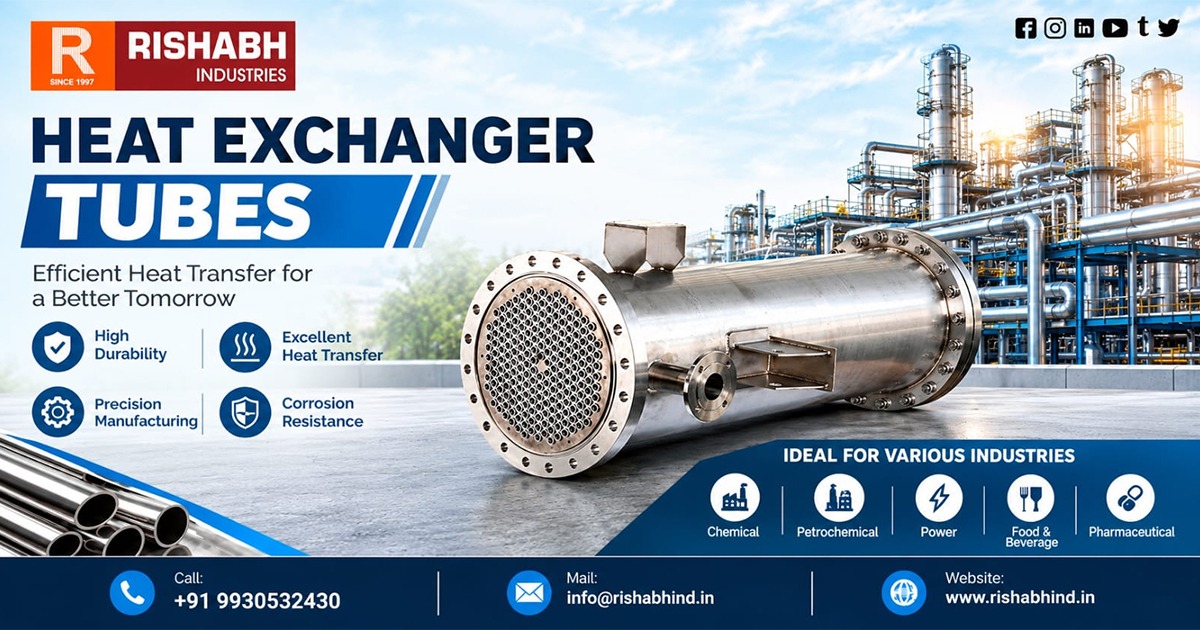
Introduction to Heat Exchanger Tubes
Heat exchanger tubes play an essential role in industrial heat transfer systems by transferring thermal energy between two fluids without necessarily allowing them to mix.
Industries use these tubes in boilers, condensers, chemical processing plants, power generation facilities, refineries, and HVAC systems to maintain efficient temperature control.
Rishabh Industries supports industrial buyers seeking reliable piping and tubing solutions for demanding process environments.
Selecting the right heat exchanger tube helps improve heat transfer efficiency, maintain process stability, reduce maintenance requirements, and support long-term equipment performance.
Heat Exchanger Tube?
A heat exchanger tube is a hollow cylindrical component designed to transfer heat between fluids at different temperatures.
Our tubes form a critical part of shell-and-tube heat exchangers, where one fluid flows inside the tubes while another circulates around their outer surfaces.
Heat exchanger tubes are available in different materials, diameters, wall thicknesses, and lengths to meet specific operating conditions.
Features of Heat Exchanger Tubes
- Efficient Heat Transfer: Transfers thermal energy between hot and cold fluids through the tube wall.
- Material Versatility: Manufacturers produce tubes from stainless steel, carbon steel, copper alloys, and other suitable materials.
- Corrosion Resistance: Appropriate material selection helps withstand corrosive fluids and challenging industrial environments.
- Pressure Handling: Suitable tube specifications support the pressure and temperature requirements of the application.
- Application Flexibility: Industries use heat exchanger tubes in heating, cooling, condensation, evaporation, and process temperature regulation.
How Does a Heat Exchanger Tube Work?
Heat exchanger tubes operate through the transfer of thermal energy from a hotter fluid to a cooler fluid. The tube wall separates the fluids while allowing heat to pass through the material.
Step-by-Step Working Process
- Hot Fluid Enters: The system directs the hot fluid through the tubes or around their external surfaces, depending on the heat exchanger design.
- Cold Fluid Circulates: A cooler fluid flows on the opposite side of the tube wall.
- Heat Transfers Through the Wall: Thermal energy moves from the hotter fluid through the tube material toward the cooler fluid.
- Fluid Temperatures Change: The hot fluid loses heat while the cooler fluid gains thermal energy.
- Fluids Exit the System: The fluids leave at their required outlet temperatures or proceed to the next stage of the process.
Factors Affecting Heat Transfer Performance
- Tube Material: Thermal conductivity influences how effectively heat passes through the tube wall.
- Tube Dimensions: Diameter, length, and wall thickness affect heat transfer area and flow characteristics.
- Fluid Velocity: Flow rates influence heat transfer and pressure drop.
- Temperature Difference: A greater temperature difference can increase the driving force for heat transfer.
- Fouling and Scaling: Deposits on tube surfaces reduce heat transfer efficiency and may increase operating costs.
Main Parts of a Heat Exchanger Tube
A heat exchanger tube works within an integrated assembly of components designed to support effective heat exchange, fluid distribution, and equipment reliability.
1. Tube Bundle
2. Tube Sheet
3. Shell
5. Tube-Side and Shell-Side Connections
6. Supporting and Sealing Components
Frequently Asked Questions
Q1: What is the primary function of a heat exchanger tube?
A1: A heat exchanger tube transfers thermal energy between fluids at different temperatures while keeping the fluid streams separated where the design requires it.
Q2: Which materials are commonly used for heat exchanger tubes?
A2: Common materials include stainless steel, carbon steel, copper alloys, and other materials selected according to corrosion resistance, thermal performance, pressure, and temperature requirements.
Q3: How does a heat exchanger tube transfer heat?
A3: Heat moves from the hotter fluid through the tube wall to the cooler fluid through convection on each fluid side and conduction through the tube material.
Q4: Where are heat exchanger tubes commonly used?
A4: Industries use them in chemical plants, refineries, power stations, boilers, condensers, food processing facilities, pharmaceutical plants, and HVAC systems.
Contact Rishabh Industries today to discuss your heat exchanger tube requirements and identify suitable industrial tubing solutions for reliable performance.
Website: www.rishabhind.in
Email Id: info@rishabhind.in
Phone No: 99305 32430
View Product: Click here