
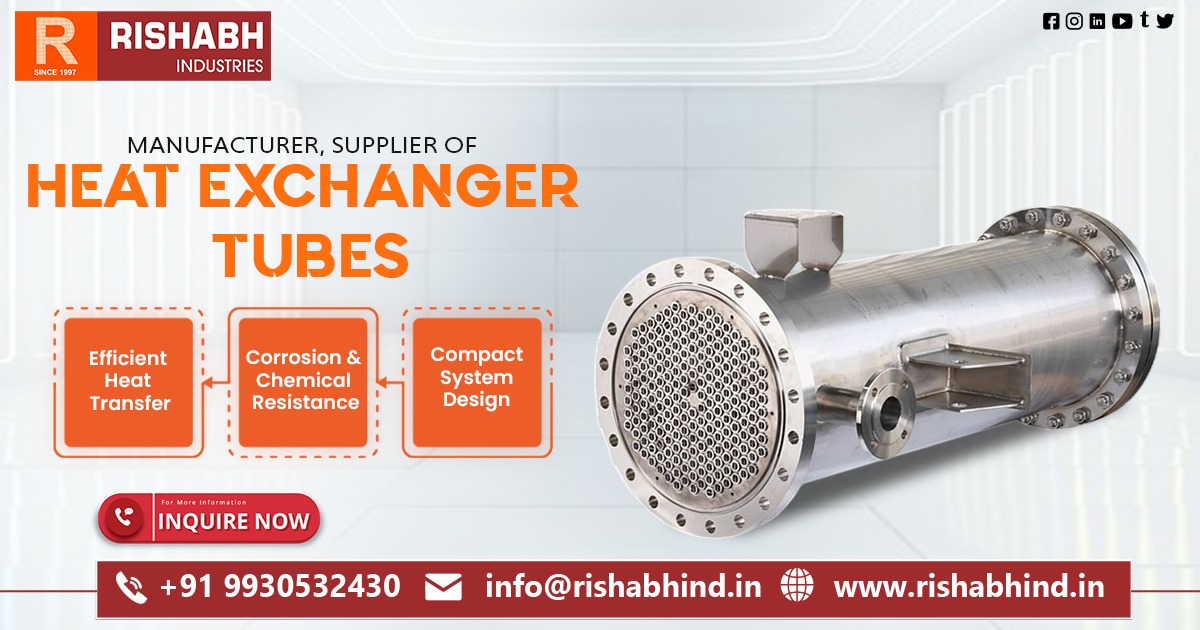
Rishabh Industries: How to Choose the Right Heat Exchanger Tubes for Your Application.
We are based in Ahmedabad, Gujarat, India.
Selecting the right heat exchanger tubes is critical for achieving optimal thermal performance, long service life, and cost efficiency.
Rishabh Industries understand that different industries and operating conditions demand specific tube materials, sizes, and designs. This guide will help you make an informed decision.
1. Understand Your Application Requirements
Before choosing heat exchanger tubes, clearly define how and where they will be used.
- Type of heat exchanger (shell & tube, condenser, boiler, evaporator, etc.)
- Operating temperature and pressure
- Nature of fluids (corrosive, non-corrosive, clean, or contaminated)
- Required heat transfer efficiency
- Industry standards and compliance needs
2. Choose the Right Tube Material
Material selection plays a major role in performance, durability, and maintenance.
- Carbon Steel Tubes
- Suitable for high-pressure and high-temperature applications
- Cost-effective for non-corrosive environments
- Stainless Steel Tubes
- Excellent corrosion and oxidation resistance
- Ideal for food processing, pharmaceuticals, and chemical industries
- Copper & Copper Alloy Tubes
- High thermal conductivity
- Commonly used in HVAC and refrigeration systems
- Alloy Steel Tubes
- Designed for extreme temperatures and pressures
- Used in power plants and petrochemical industries
3. Consider Tube Size and Thickness
Correct tube dimensions ensure efficient heat transfer and mechanical strength.
- Outer diameter (OD) and inner diameter (ID)
- Wall thickness based on pressure and temperature
- Length of tubes for space and performance optimization
- Compatibility with tube sheets and exchanger design
4. Evaluate Corrosion and Fouling Resistance
Environmental and fluid conditions directly impact tube lifespan.
- Assess chemical composition of fluids
- Choose corrosion-resistant materials for aggressive environments
- Consider surface finish to reduce fouling and scaling
- Select tubes that allow easy cleaning and maintenance
5. Check Thermal and Mechanical Performance
Efficient heat transfer and structural reliability are essential.
- Thermal conductivity of tube material
- Ability to withstand thermal expansion
- Resistance to vibration and mechanical stress
- Performance consistency under continuous operation
6. Compliance with Industry Standards
Using standard-compliant tubes ensures safety and reliability.
- ASTM, ASME, DIN, or other applicable standards
- Industry-specific certifications
- Quality testing and inspection requirements
7. Focus on Long-Term Cost Efficiency
Initial cost should be balanced with long-term performance.
- Durability and service life of tubes
- Maintenance and replacement frequency
- Energy efficiency and operational savings
- Overall lifecycle cost
8. Partner with a Reliable Manufacturer
Choosing the right supplier is as important as choosing the right tube.
- Proven manufacturing expertise
- Consistent quality control processes
- Customization options for specific applications
- Technical support and after-sales service
Why Choose Rishabh Industries for Heat Exchanger Tubes?
- Wide range of heat exchanger tube materials and sizes
- Precision manufacturing and strict quality standards
- Industry-focused solutions for diverse applications
- Commitment to reliability, performance, and customer satisfaction
Rishabh Industries provide heat exchanger tubes for your application across India.
For more information and inquiries, feel free to contact us.
Website: www.rishabhind.in
Email Id: info@rishabhind.in
Phone No: 99305 32430
View Product: Click here